
A "no signal" or weak signal message is one of the most common DSTV issues, and it usually comes down to one of a small handful of causes. Here's how to work through them before booking a technician - and how to tell when it genuinely needs a professional visit.
Start with the obvious: weather
Heavy rain, thick cloud cover, or storms are the single most common cause of a temporary signal loss - satellite signal has to travel a long way and can be disrupted by bad weather between your dish and the satellite. If the signal drops during bad weather and comes back once it clears, this is normal and not a fault with your installation.
Dish alignment can shift over time
Wind, general settling, or something bumping the mount can nudge a dish's alignment just enough to weaken the signal without knocking it out completely. This tends to show up as an intermittent or partial signal rather than total loss, and it's one of the more common reasons a previously-working installation starts acting up months or years later.
Cabling and connectors degrade
Outdoor cabling is exposed to sun, heat, and moisture over years, and connectors can corrode or work loose. If the signal is patchy on some channels but fine on others, or drops out when it's windy (which can flex a loose cable), worn cabling or a loose connector is a likely cause.
LNB issues
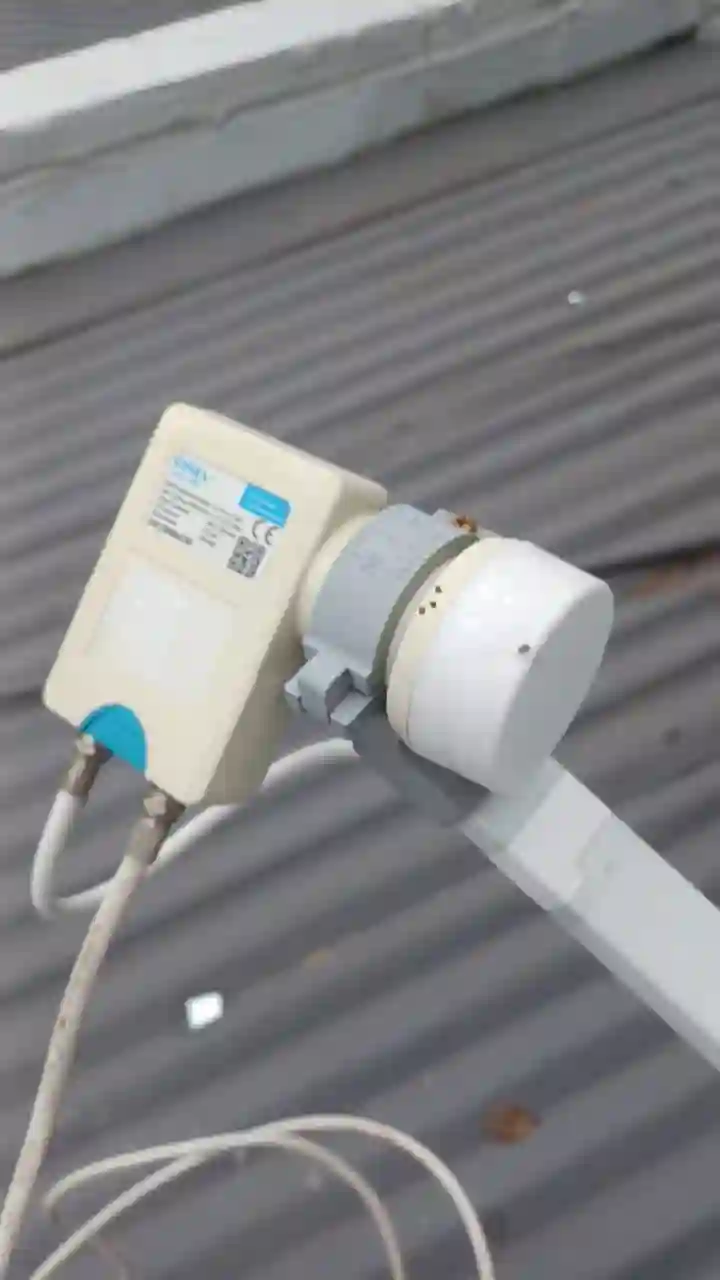
The LNB is the component at the end of the dish arm that actually receives the satellite signal. These can fail over time, especially after years of sun and weather exposure. An LNB fault typically shows up as a complete loss of signal on all channels rather than a partial or intermittent one.
What you can check yourself
- Check whether the weather is the likely cause, and give it time to clear before assuming a fault.
- Check that all visible cable connections at the decoder are firmly seated.
- Restart the decoder - unplug it, wait a minute, and plug it back in.
- Check if the issue affects all channels or only some - this narrows down whether it's signal, cabling, or a channel-specific issue.
When to call a technician
If the signal issue persists once the weather has cleared, affects all channels consistently, or comes back repeatedly after a restart, it's worth having a technician check the dish alignment, cabling, and LNB properly rather than guessing further - especially since dish work often means getting on a roof, which isn't something to attempt without the right equipment.
Still having signal problems?
We diagnose and fix DSTV signal issues across Johannesburg and the East Rand - dish realignment, cabling, and LNB replacement included.
Book a technician